

When an Adventure Goes Wrong: Inside Squamish Search and Rescue's New Home
On June 19, Squamish Search and Rescue cut the ribbon on their new Phase 1 compound at the Squamish Airport, and if you were anywhere near the celebration, you could feel what it meant. This was nearly a decade in the making. SSAR is one of the busiest rescue teams in British Columbia, responding to more than 130 calls a year, and for years they ran that entire operation out of a space far too small for what they do.
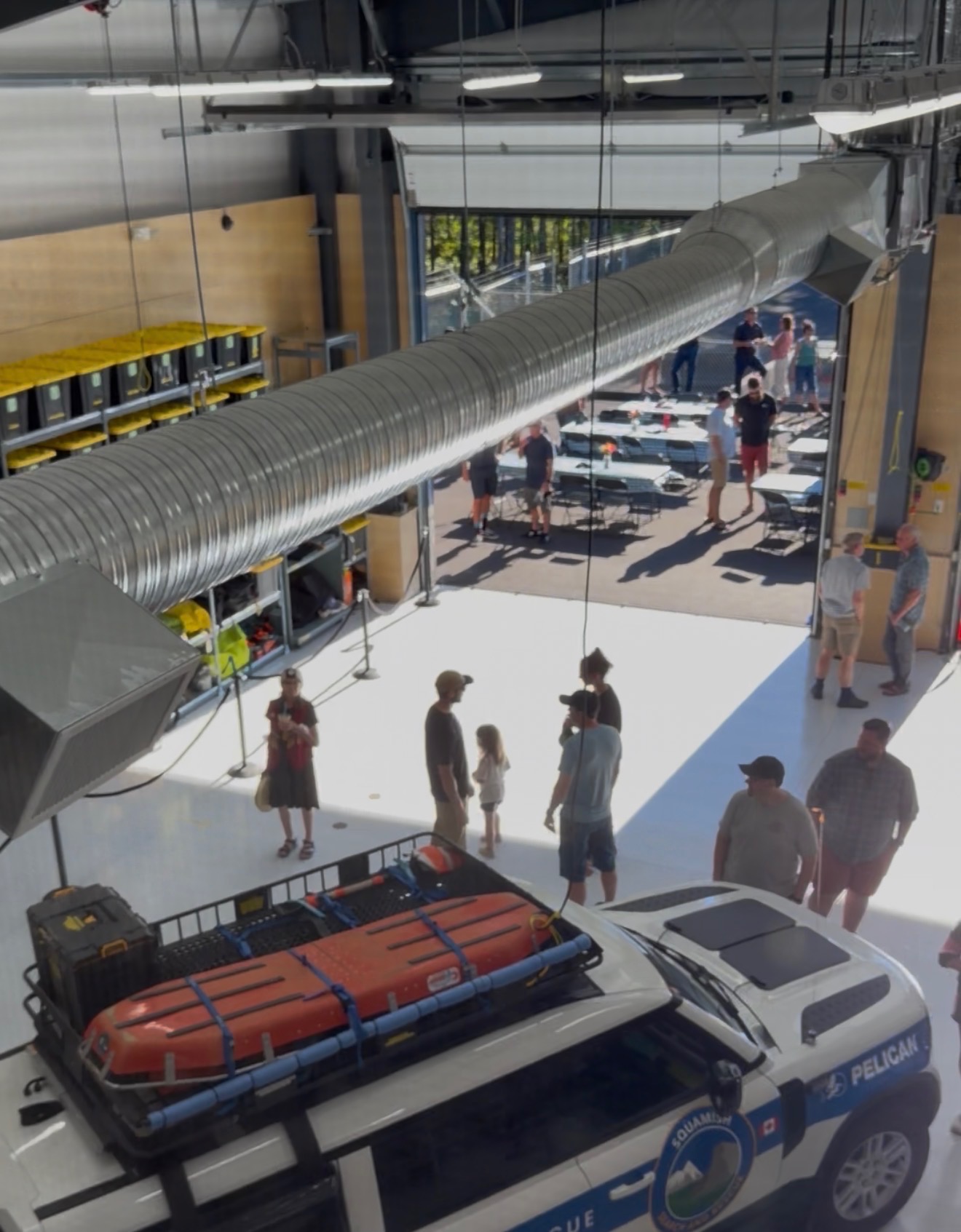
The new building changes that. It is purpose-built for the way the team actually works: room for equipment and vehicles, space to run training events with a lot of people on site, and a permanent home for an organization this community leans on more than most people realize. The project came together through the District of Squamish, the SLRD, the Whistler Blackcomb Foundation, local donors, and a long list of volunteers and local businesses. As SSAR put it themselves: this is what community looks like.
We got to be a small part of it, and we want to tell you about the building, because it is a genuinely interesting one.
How we ended up on this project
Blue Water Concepts, the Squamish design-build firm behind the project, brought us in for the heating and mechanical work. When they told us who the building was for, the decision was easy. Some projects you just say yes to, so we discounted the equipment to support the cause, and Refrigerative Supply Limited. RSL, our equipment supplier, stepped up with a contribution of their own.
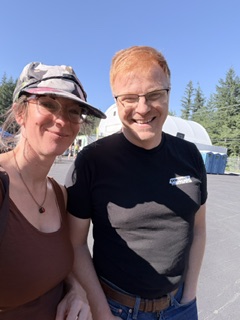
That is worth pausing on: a builder, a mechanical contractor, and a supplier all moving in the same direction because the client was SSAR. Nobody had to be talked into it.
What it takes to heat a rescue base
Here is where the building gets interesting from where we stand.
The new compound has no gas service at all, and it is a big volume to heat. So the whole thing runs electric: a Samsung DVM heat pump system, roughly five tons, with auxiliary electric backup heat. On an ordinary day it keeps a large, well-insulated space comfortable for everyday operations, and it has the capacity to handle a building full of people on a training weekend.
But this is an emergency-services facility, and that changes the design brief. The question is not just "will it be comfortable" but "will it work on the worst night of the year, during the worst event this region could face." So the system carries backup heat, and we seismically restrained the equipment to the kind of standard used for police and fire halls. If an earthquake hits this corridor, SSAR will be one of the organizations this community needs most in the hours that follow, and their building has to be operational exactly when everything else is not.
That is what resilience actually means in mechanical work. It is not a feature on a spec sheet. It is bracing and backup and sizing decisions made for a day everyone hopes never comes.
A gas-free building that has to perform
There is one more thing this project proves. A large, hard-working, all-electric building in a Sea to Sky winter is not an experiment anymore. When a heat pump system is sized properly for the real load, an emergency-services facility can run gas-free without compromising on the one thing it cannot compromise on: being ready. We make the same argument at house scale all the time, and it was satisfying to see it hold at this scale, for this client.
Thank you, SSAR
Mostly, though, this post is a thank you. SSAR's volunteers head out at all hours, in all weather, for more than 130 calls a year, and they do it for free. Getting to put good equipment into their new home, alongside Blue Water Concepts, Refrigerative Supply Limited, the District of Squamish, and everyone else who stepped up, is the kind of work that reminds us why we like doing business in this town.
If you want to support the team, they make it easy: squamishsar.org/support. They are worth every dollar.
Frequently asked questions
Can a large building in Squamish be heated without gas?
Yes. SSAR's new headquarters runs entirely on an electric heat pump system with electric backup, no gas service at all. The keys are a properly sized system based on the building's real heating load and a well-insulated envelope. The same approach works at house scale.
What is seismic restraint for HVAC equipment?
It means the mechanical equipment is braced and anchored so it stays in place and remains operational after an earthquake. It is standard practice for post-disaster buildings like police and fire halls, and it was applied to SSAR's facility because the team needs to function during exactly that kind of emergency.
Who built the new Squamish Search and Rescue facility?
The Phase 1 compound at the Squamish Airport was led by Blue Water Concepts, a Squamish design-build firm, with support from the District of Squamish, the SLRD, the Whistler Blackcomb Foundation, community donors, and local trades. Porcupine Mechanical designed and installed the all-electric heating system.
We are Porcupine Mechanical, a Squamish-based mechanical contractor working from the North Shore up through the Sea-to-Sky, from North Vancouver to Squamish to Whistler, on residential and light commercial heating, cooling, and ventilation. Our whole thing is doing it efficiently and doing it right the first time.
